What can I do when a client won't pay my invoice?
A calm, written sequence from the due date to a letter of demand, the wording for each step, and where the law comes in

Short answer
Follow a calm, steady sequence: a friendly email on the due date, a second email at about two weeks, then a phone call, then a statement of everything they owe. If that fails, send a final notice and a formal letter of demand. Most countries have a small-claims process for modest amounts; for larger debts, get legal advice.
As I write this, I have a project where, nine months on, I’m still not paid in full. It happens to everyone who freelances long enough, including people who are careful about it. What you can control is how quickly you notice, and how calmly and consistently you follow up.
Most late invoices aren’t refusals. They’re forgotten, stuck in an approval queue, or sitting with someone who has left the organisation. So the first steps should assume good faith, stay friendly, and get steadily clearer.
My routine is simple: an email, then a second email, then a phone call, then a statement. Here’s that sequence with wording you can adapt.
Day 0: the friendly email
A short nudge, sent the day the invoice falls due. Make paying as easy as possible: attach the invoice again and repeat the payment details.
Hi Sarah, a quick reminder that invoice INV-0142 for $2,400 is due today. I’ve attached it again with the payment details. Let me know if you need anything else to process it. Thanks!
Around day 14: the second email
Still polite, but specific. Ask a direct question, because questions get answers.
Hi Sarah, invoice INV-0142 for $2,400 is now two weeks overdue. Could you let me know when it’s scheduled for payment? If there’s a problem with the invoice, tell me and I’ll sort it out today.
Next: pick up the phone
If two emails haven’t worked, call. One conversation often does what three emails couldn’t, and you find out where the invoice is actually stuck: an approval queue, a missing purchase order number, a person who’s on leave.
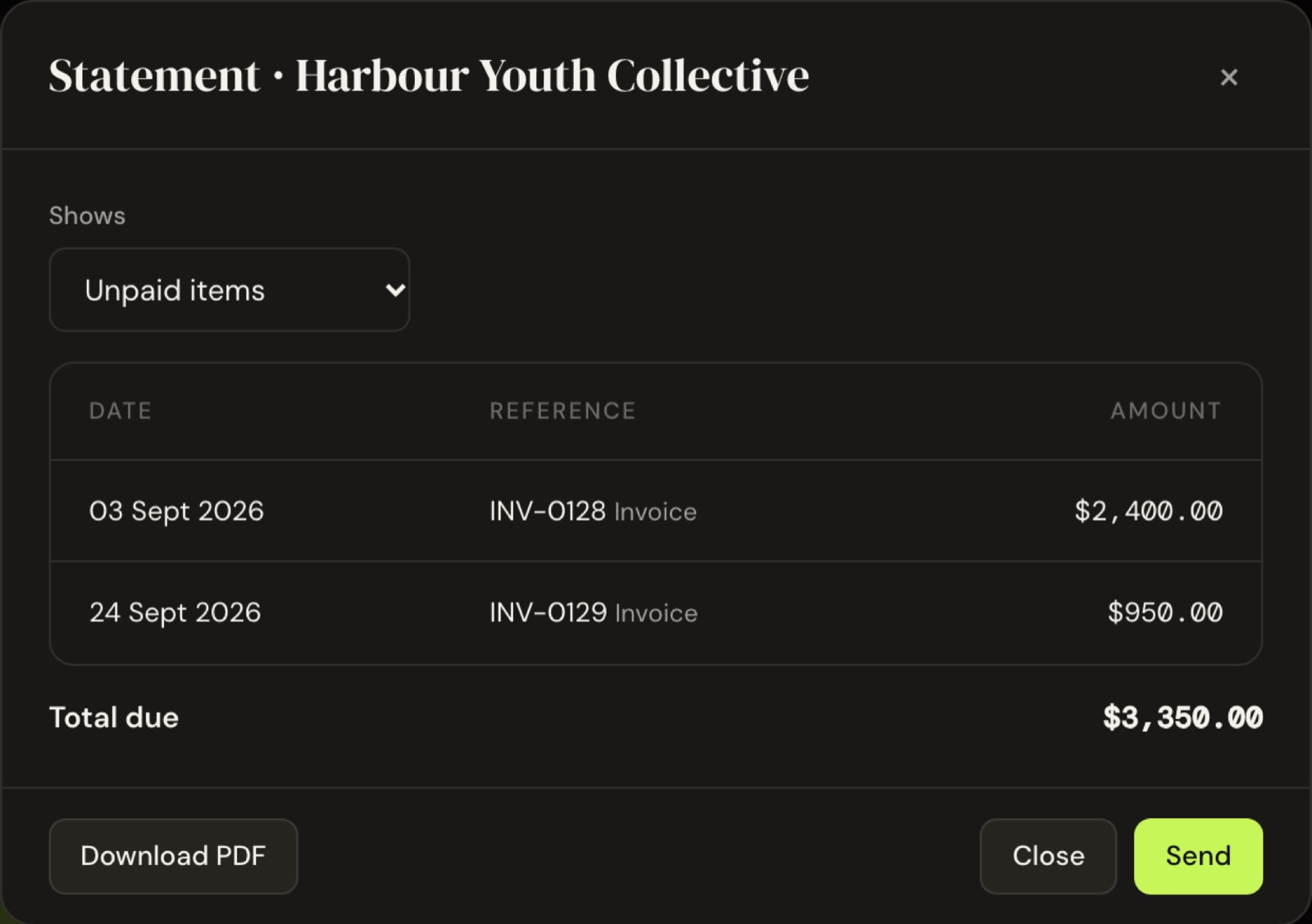
Then: send a statement
A statement lists everything the client owes and how old each amount is. It’s harder to ignore than a single invoice, and it often reaches the finance team rather than just your contact. If there are several unpaid invoices, it makes the total impossible to miss.
My routine: an email, then a second email, then a call, then a statement.
Day 30 and beyond: the final notice
If you’re still waiting, state the consequences calmly and give a date.
Hi Sarah, invoice INV-0142 for $2,400 is now 30 days overdue, and I haven’t been able to get a payment date. Please arrange payment by Friday 13 November. If it’s still unpaid by then, I’ll pause further work on the project and send a formal letter of demand.
I’ve never had to pause a project to get paid, but it is the strongest lever most freelancers have. If your agreement says usage rights pass to the client on full payment, mention that too: it reminds them what they don’t yet own.
Next: a letter of demand
A letter of demand is a formal written request that sets out what’s owed, why, and a deadline (often 10 to 14 days) after which you’ll take legal action. You can write one yourself, or have a lawyer send it on their letterhead, which often works on its own.
When it goes further: the law
Once polite and formal requests have failed, the route depends on where you are and how much is owed. Most countries have a simpler, cheaper process for small debts that doesn’t need a lawyer. A few examples:
- England and Wales: claims up to £10,000 usually go through the small claims track.
- South Africa: the Small Claims Court handles claims up to R20,000, but only individuals can bring them, not companies or close corporations.
- United States: each state sets its own small-claims limit.
Above those limits, or when the client is in another country, take legal advice before you spend money on a claim.
The best fix is upstream
Every step above is easier when the job started properly. Agree payment terms in writing before you begin, put a late-payment clause in them, and take a deposit so you’re never owed the whole fee at once. A client who has already paid 50% has every reason to pay the rest.
Questions people also ask
Can I charge interest on a late invoice?
If your agreement or invoice terms set an interest rate for late payment, you can generally claim it. If your terms are silent, it depends on the law where you and the client are, so take advice before adding interest to a demand. The simple fix is to put a late-payment clause in your terms from now on.
Should I stop work until they pay?
If the client is overdue on earlier stages, pausing further work is reasonable, and it's the strongest lever you have. Tell them in writing, calmly, and say exactly what will restart it.
What if the client is in another country?
Chasing works the same way: calm, written, consistent. Legal action across borders is slow and expensive, which is the strongest argument for deposits and staged payments on international work, so you're never owed the whole fee at once.