Cash or invoiced: which number tells me how my business is really doing?
Invoiced figures say business is good. Your bank balance says whether you can pay the bills. Here's which one to run your business on, and why.

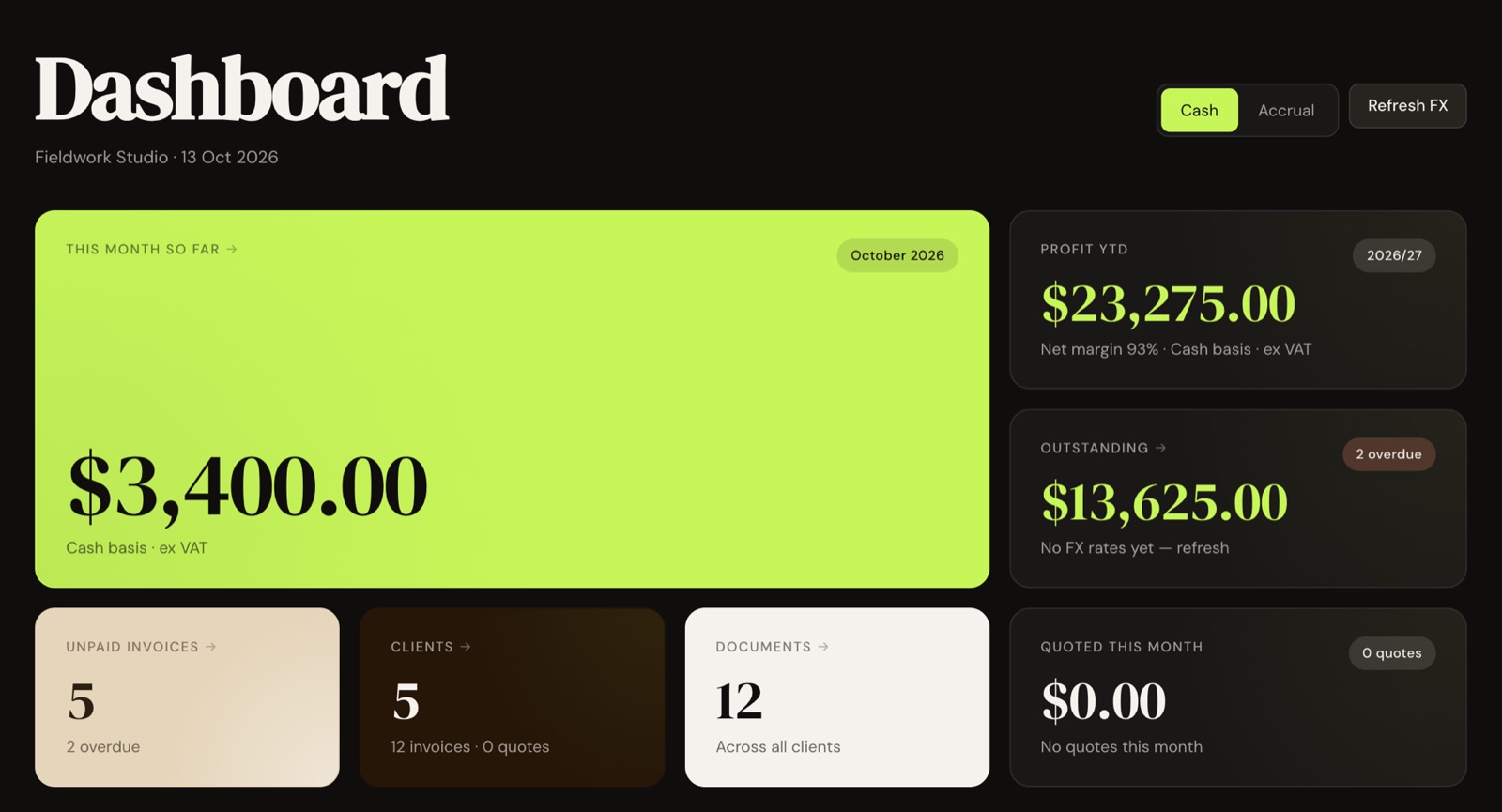
Short answer
Run your business on cash: the money that has actually reached your account. Invoiced (or accrual) figures count work you've billed whether or not it's been paid, which makes them useful for tax and your accountant, but they run weeks or months ahead of your bank balance. Watch your cash, look ahead for gaps, and keep a cash reserve for the payments that land late.
For years I’d have months where the numbers said business was good, and my bank account said otherwise. It’s a frustrating feeling: you’ve invoiced plenty, the work is going well, and yet you feel tight. The numbers aren’t lying. You’re just looking at the wrong one.
Two ways of counting the same work
Cash basis counts money when it lands in your account. If you invoiced $5,000 in September and the client paid in November, that $5,000 belongs to November.
Invoiced basis, which accountants call accrual, counts income when you earn it: the date of the invoice, whether or not it’s been paid. That same $5,000 belongs to September, the month you did the work.
Run your business on cash
A business coach I worked with put it simply: run on invoiced figures and you’re always running on a lag. The money you’re counting is still weeks away, sitting in someone else’s account and someone else’s approval queue. You can’t pay rent with an invoice.
So cash is what I run my business on. It’s the number I use to decide what I can spend, what I pay myself and what I put aside. Invoiced figures are really for tax and my accountant.
Invoiced is for tax and my accountant. Cash is what I run my business on.
Looking at cash alone has one weakness: it tells you about today, not next month. So the habit that matters is looking ahead. I watch my cash numbers so I can see when a gap may be coming: a month where the money due in won’t cover what’s going out, because a big invoice is on 60-day terms or a project is between stages.
Keep a reserve for the late payments
The other half of running on cash is having some. Payments will land late, sometimes very late. A cash reserve means that when a payment doesn’t arrive when you need it, you’re covered, and a late client becomes an annoyance rather than a crisis.
Build it in good months, when a few invoices land at once. Work out what a normal month costs you to run, including paying yourself, and aim to hold a few months of it.
The number in between: what you’re owed
The difference between your invoiced and cash figures is the money your clients are holding: everything invoiced and not yet paid. Accountants call it debtors. It’s worth a glance every month, for two reasons.
First, if it keeps growing faster than your invoicing, clients are paying more slowly, and that’s a cash problem on its way. Second, the oldest amounts in it are the ones least likely to be paid. Anything past 30 days deserves a reminder now, not at the end of the quarter. If it gets that far, here’s what to do when a client won’t pay.
A five-minute monthly check
At the end of each month, look at your cash: what came in, what went out, and what you’re holding in reserve. Then look ahead at what’s due in and what’s due out over the next two months, and spot the gap before it arrives. If the amount you’re owed keeps climbing, fix that before it fixes you: ask for deposits, shorten your payment terms, and chase earlier.
Questions people also ask
Which basis should a freelancer use?
Run the business on cash, because it's money you actually have: use it to decide what you can spend, pay yourself and put aside. Keep invoiced (accrual) figures for tax and your accountant, and as a view of how much work you're doing.
Why does my best month feel like my worst one?
Because you invoiced a lot of work that hasn't been paid yet. On an invoiced basis it was a great month; on a cash basis the money arrives one or two months later. The gap between the two is your clients' payment terms.
How big should my cash reserve be?
Big enough to cover your fixed costs, including paying yourself, through the longest late payment you'd realistically face. Work out a typical month's outgoings and build up a few months of them; the right number depends on how lumpy your income is.
Does the tax office care which one I use?
Tax has its own rules about when income counts, and VAT, GST and sales tax often have their own basis too. Keep your management numbers however helps you run the business, and let your accountant handle which basis applies for tax.